
2025: The Year AI Development Grew Up
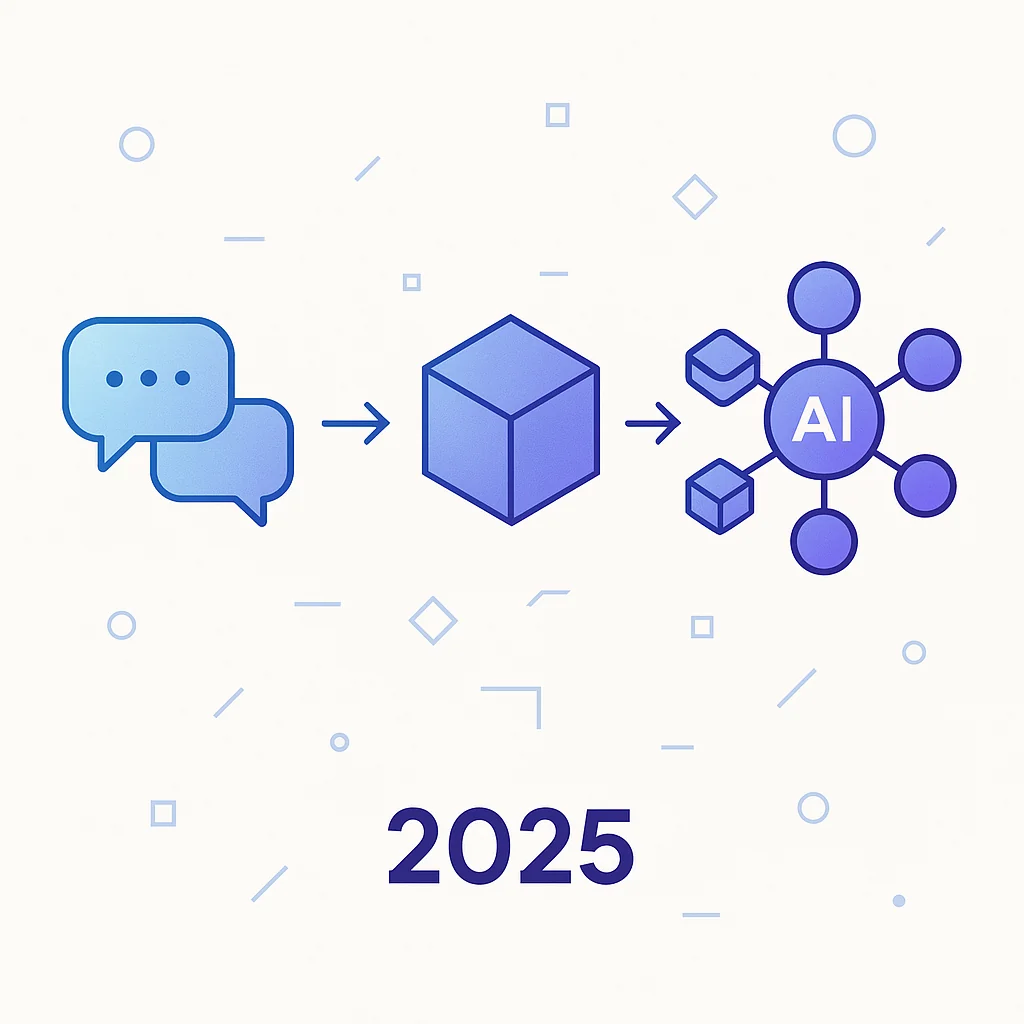
2025 wasn't the year AI got smarter. It was the year we got smarter about working with AI.
Twelve months ago, we argued about which model was best. Today, we argue about which agent platform fits our workflow. That move from model-centric to agent-centric development defines everything that happened this year.
Here's the timeline.
Late 2024: the foundation
You can't tell the 2025 story without the groundwork from late 2024. These weren't product launches. They were paradigm shifts wearing release notes.
September 2024: reasoning arrives
OpenAI's o1-preview dropped on September 12th, and suddenly AI could think before answering. Not pattern-match. Not autocomplete. Actually reason through problems step by step.
That mattered for coding. Complex debugging, architecture decisions, and multi-step refactors all require this kind of deliberate thinking. The autocomplete era was ending.
October 2024: AI gets hands
Claude 3.5 Sonnet's October update came with something wild: computer use beta. For the first time, an AI could see your screen and control your mouse and keyboard. It was clunky. The implications were huge. AI wasn't just suggesting code anymore. It was learning to operate computers.
November 2024: the USB for AI
On November 25th, Anthropic announced MCP, the Model Context Protocol. People called it "the USB for AI agents." That description undersold it.
MCP meant any AI could connect to any tool through a standardized protocol. No more N×M integration nightmares where every AI needs custom code for every tool. Just N+1: one protocol, infinite connections.
December 2024: Shipmas
OpenAI closed out the year with 12 days of announcements. Day 1 brought ChatGPT Pro at $200/month, a signal that AI was becoming serious professional infrastructure. Day 12 brought o3, previewing the next generation of reasoning models.
The stage was set.
2025: the timeline
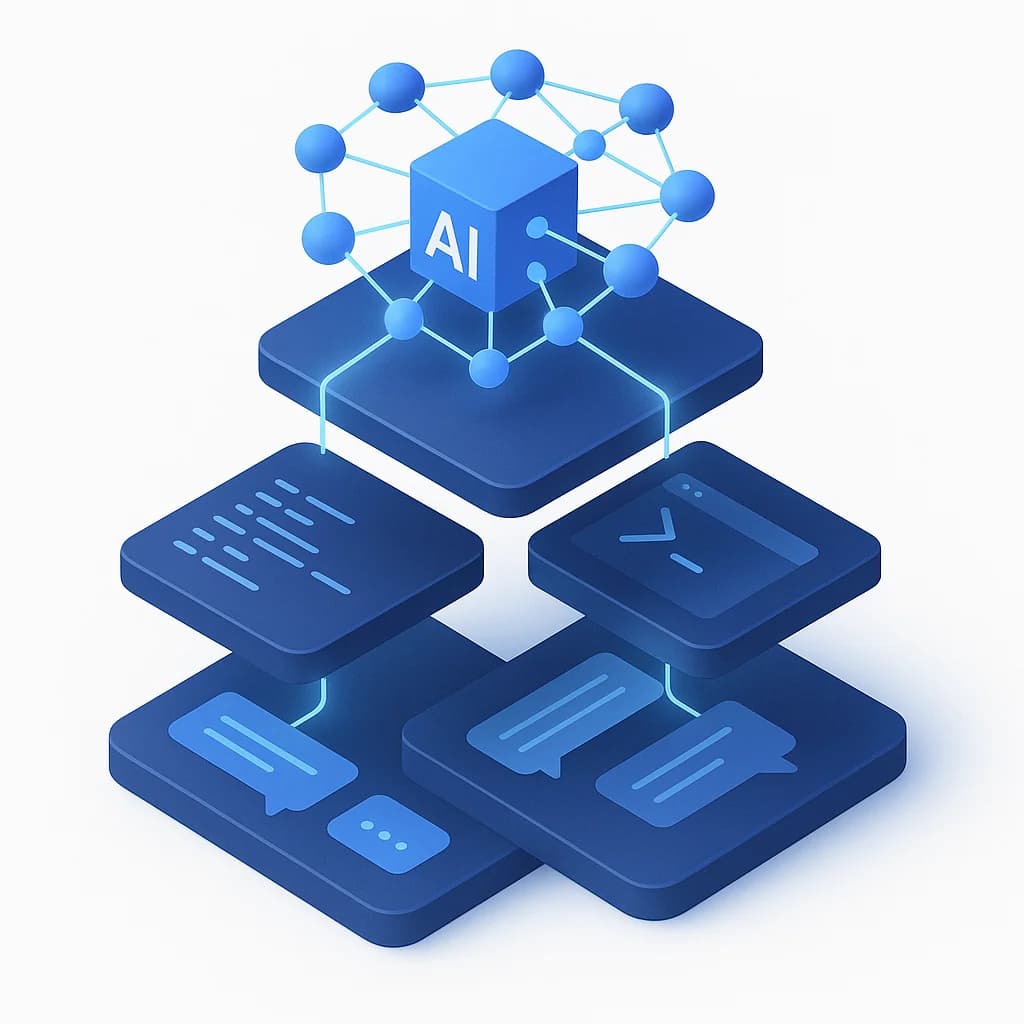
January: reasoning goes mainstream
January 31st: o3-mini released
OpenAI made reasoning affordable. The mini model brought step-by-step thinking to everyone, not just enterprise customers. Every developer could now reach a model that actually thought through problems.
February: the agents land
February 24th: Claude Code CLI (preview)
Everything changed here. Anthropic didn't release another chatbot. They released the first true agentic coding tool.
What made it different? Claude Code could:
- Edit files across your entire codebase, not just the current file
- Run terminal commands: tests, builds, git operations
- Iterate autonomously by exploring, planning, coding, and committing in loops
- Maintain context via CLAUDE.md project files
Anthropic's engineers reported using it for 90%+ of their git operations. This wasn't AI-assisted coding. This was AI-driven coding with human oversight.
Same day: GitHub Copilot Agent Mode
Microsoft wasn't sleeping. The same day Claude Code dropped, Copilot got agent mode in VS Code. It could analyze your codebase, propose multi-file edits, run terminal commands, and auto-correct based on output.
The race was on.
March-April: the arsenal expands
March 19th: o1-pro API
Enterprise-grade reasoning became programmable. Teams could build production systems on top of OpenAI's strongest reasoning capabilities.
April 16th: OpenAI Codex CLI + o3 general access
OpenAI entered the agentic CLI war. Codex CLI launched open-source under Apache 2.0, with:
- Local repository access and multi-step task execution
- Approval modes for controlled automation
- MCP support for tool integration
- Image and screenshot input for visual context
codex execfor scripting and CI/CD integration
Two major agentic CLIs in two months. The pattern was clear. The terminal was becoming the new IDE.
May: Claude 4 changes everything
May 22nd: Claude Code GA + Claude 4 launch
Claude Code left preview and went generally available. The bigger story was Claude 4 itself, a model built from the ground up for agentic work.
Key capabilities:
| Feature | What It Enabled |
|---|---|
| Extended thinking | Hybrid reasoning: fast responses or deep deliberation, same model |
| Memory files | Long-term task awareness across thousands of steps |
| Multi-hour stability | Complex tasks without quality collapse |
| 72.5% SWE-bench | World-class autonomous coding benchmarks |
The APIs that shipped alongside mattered just as much:
- Code Execution Tool: Run Python in a sandbox mid-conversation
- Files API: First-class file read/write operations
- MCP Connector: Native protocol support
- Extended prompt caching: One-hour cache for persistent workflows
Claude 4 wasn't just a better model. It was infrastructure for building agents.
May 2025: JetBrains MCP support
IntelliJ IDEA 2025.1 shipped with full MCP client support. The protocol was going mainstream.
June: the big three complete
June 10th: o3-pro released
OpenAI's peak reasoning model arrived. The price was steep, but the capability gap was real. This was the model for problems that stumped everything else.
June 25th: Gemini CLI unveiled
Google completed the trifecta. Their agentic CLI came with:
- Open source under Apache 2.0
- 1 million free tokens per day
- Deep integration with Firebase, Cloud, and Workspace
- Gemini 2.5 Pro under the hood
In ten weeks, all three major AI companies shipped terminal-native coding agents.
The IDE wars: throughout 2025
While the CLI battle raged, the IDE market exploded into full-scale competition.
Cursor positioned itself as the supervised agent. Powerful but controlled. Every change showed up in a diff panel. You approved each edit. The @codebase tags let you explicitly guide context.
Windsurf went the other direction with Cascade, an autonomous agent that could scan your entire repo, pick relevant files, edit them, run tests, and even deploy with minimal confirmation dialogs.
Copilot played the integration game, pushing agent mode into JetBrains, Eclipse, and Xcode. If you were already in the Microsoft ecosystem, the path of least resistance was clear.
The philosophical split was real:
- Cursor: AI pair programmer you supervise
- Windsurf: AI junior dev you delegate to
- Copilot: AI seamlessly integrated into your existing workflow
Fall: maturation
August: Copilot expands everywhere
Agent mode reached Xcode and Eclipse. Apple developers and enterprise Java shops got agentic capabilities.
September 30th: Claude Sonnet 4.5
The mid-tier model got faster and more reliable. That matters for workflows where cost per token is the constraint.
October 20th: Claude Code web app
Agentic coding moved beyond the terminal. Browser-based agents, multi-agent management, accessible to developers who never touched a CLI.
November 24th: Claude Opus 4.5
The flagship refresh brought improved long-horizon stability. Multi-hour tasks got even more reliable.
MCP: the connective tissue
Throughout 2025, MCP adoption accelerated quietly but relentlessly.
By year's end, the protocol was the standard:
| Tool | MCP Support |
|---|---|
| Cursor | One-click server setup |
| Windsurf | Native integration |
| JetBrains | Full client in 2025.1 |
| VS Code | Via Copilot and extensions |
| Zed | MCP prompts as slash commands |
| Sourcegraph Cody | Via OpenCtx |
| Codex CLI | Native support |
Thousands of community-built MCP servers shipped for databases, DevOps tools, productivity apps, and code operations. The N×M integration problem was solved.
The real shift: from models to harnesses
Here's what actually changed in 2025: we stopped caring which model and started caring which harness.
Every major model release still mattered. Claude 4's extended thinking. o3's reasoning depth. GPT-5's speed and routing. Those capabilities drove real improvements.
But the interface, the harness that wrapped these models, became the thing that decided your productivity.
Think about it:
- Same model, different harness = completely different experience
- CLAUDE.md files = persistent project context that survives sessions
- Agent modes = autonomous multi-step execution vs. one-shot suggestions
- MCP integration = access to your entire tool ecosystem
The model is the engine. The harness is the car. And in 2025, we realized we'd been debating engines while ignoring that some of us were driving sports cars and others were pushing shopping carts.
From agentic coding to agentic engineering
The final evolution of 2025 wasn't technical. It was conceptual.
Early in the year, we talked about agentic coding. AI that could write and edit code autonomously.
By year's end, the conversation shifted to agentic engineering. AI that could:
- Take high-level specifications
- Break them into implementation plans
- Execute across multiple files and systems
- Iterate until tests pass
- Create commits and pull requests
We stopped reviewing code line-by-line and started reviewing outputs. Did the feature work? Did the tests pass? Did the implementation match the spec?
This is spec-driven development at scale. You specify what, the agent figures out how, and you verify whether.
Predictions for 2026: the year of orchestration
If 2025 was about agents going mainstream, 2026 will be about orchestrating them.
The patterns are already visible:
- Agent SDKs from OpenAI and Anthropic for building custom agents
- Multi-agent workflows where specialized agents hand off to each other
- Skills and toolboxes that plug into agents without context overhead
The unit of work is shifting again. In 2024, it was the model call. In 2025, it was the agent session. In 2026, it'll be the workflow: multiple agents coordinated across multiple steps.
Think CI/CD pipelines, but for AI operations. A planning agent hands off to an implementation agent, which hands off to a testing agent, which hands off to a review agent.
Context management becomes orchestration. Session boundaries become workflow steps. Individual agents become nodes in a larger system.
The takeaway
2025 was the year AI development grew up.
Not because the models got smarter, though they did. Not because the tools got faster, though they did. We, the developers, finally figured out how to work with these systems effectively.
We learned that context engineering matters more than prompt engineering. That the harness matters as much as the model. That reviewing outputs beats reviewing code. That agents are collaborators, not just tools.
The developers who thrived this year weren't the ones with access to the best models. They were the ones who built the best workflows around whatever models they had.
That's the lesson of 2025. And it's the foundation for everything coming next.
What was your biggest AI development shift in 2025? The tool that changed your workflow? The moment it clicked? I'd love to hear about it.

Matthew Fontana
Staff Engineer at Airbnb · ex-Spotify, ex-UPS · 13 yrs in enterprise software
I build agentic developer platforms inside large engineering orgs and write here about the work.